Dental identification,
at scale.
Bright applies AI to dental identification and forensic odontology. Upload radiographs and the platform compares post-mortem records against ante-mortem databases, and the reverse, delivering rapid, accurate matching for experts working under pressure.
Identification work under pressure.
Mass casualty incidents and disaster response zones present a particular problem: a large volume of cases, incomplete records, and a requirement for certainty, all at once, and all urgent. The constraint is rarely expertise. It is time.
Volume against the clock
Manual comparison of dental records is meticulous, skilled work. In a mass casualty event, the number of cases far exceeds what available specialists can process quickly.
Records vary in quality
Ante-mortem records arrive in inconsistent formats, from different sources, captured at different times, with varying completeness.
Certainty is non-negotiable
An identification carries legal weight and irreversible human consequence. Speed cannot come at the cost of accuracy. The standard is certainty, not probability.
Identification that doesn't depend on dental work.
Conventional dental identification relies on restorations, fillings, and treatment history as comparison points. Where there is no dental work, there is little to compare, and the method reaches its limit exactly where it is often needed most.
The conventional constraint
Restoration-based matching requires prior dental work to exist. Young individuals, populations with limited access to dental care, and unrestored dentition offer few or no identifying features, leaving the most difficult cases the least served.
How Bright works
Our engine matches on inherent dental morphology, the underlying anatomical structure itself. It operates independently of dental condition, age, or treatment history, and successfully matches virgin teeth with zero prior dental work.
Conceptual example of a morphological comparison. Not the product interface.
From upload to confirmed identification.
The platform handles the comparison work. The odontologist retains the determination.
Upload
Dental radiographs and images are uploaded into the case.
Automated analysis
The engine extracts morphological features from each record without manual coding.
Bidirectional comparison
Post-mortem records are compared against ante-mortem databases, and ante-mortem against post-mortem.
Ranked candidates
A confidence-scored shortlist is returned, ordered for efficient expert review.
Expert confirmation
The odontologist examines the comparison using purpose-built visual tools and makes the final determination.
Report generation
Organisation-specific documentation is produced instantly, in the format your organisation requires.
What the platform provides.
Morphological matching (1-to-N)
Identifies individuals from inherent dental morphology, operating independently of the subject's dental condition, age, or past treatments, including dentition with no prior dental work.
Expert verification suite
Advanced visual tools and overlays that enable forensic experts to perform the final manual match efficiently, supporting the path to complete certainty rather than substituting for it.
Automated custom reporting
Generates dynamic, organisation-specific reports instantly, removing documentation overhead during the most time-critical stages of an identification effort.
Explainable results
Every candidate comes with a score and a region-by-region breakdown of what matches, what possibly matches, and what does not, so the expert can check the reasoning rather than accept a verdict.
The expert makes the identification. Bright accelerates every step up to the determination: feature extraction, database comparison, candidate ranking, documentation. The forensic odontologist examines the evidence and confirms the match. That division is deliberate and is not something we intend to change.
Guided by those who have done this work.
Our development is guided by a forensic odontologist with direct experience of large-scale identification operations.
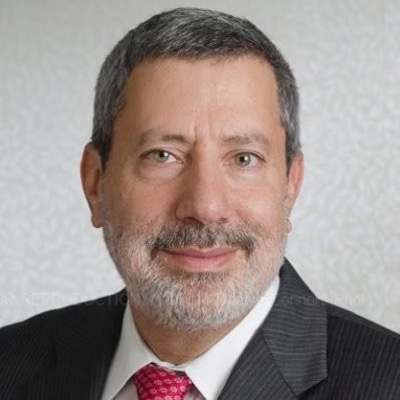
Dr. Aschheim led the dental identification operation following the 9/11 World Trade Center disaster, one of the largest and most complex forensic identification efforts ever undertaken. His guidance informs how Bright approaches accuracy, verification, and the role of the expert in the identification process.
Speak with our team.
We'll demonstrate the matching engine, walk through the verification tools, and discuss how the platform would integrate with your existing identification workflow.
Message received
Thank you for reaching out. A member of our team will be in touch within one business day.